Rutgers, USDA Researchers Report Yeast Compounds Repel Spotted-Wing Drosophila in Cage Tests
10/13/2026 / By Chase Codewell
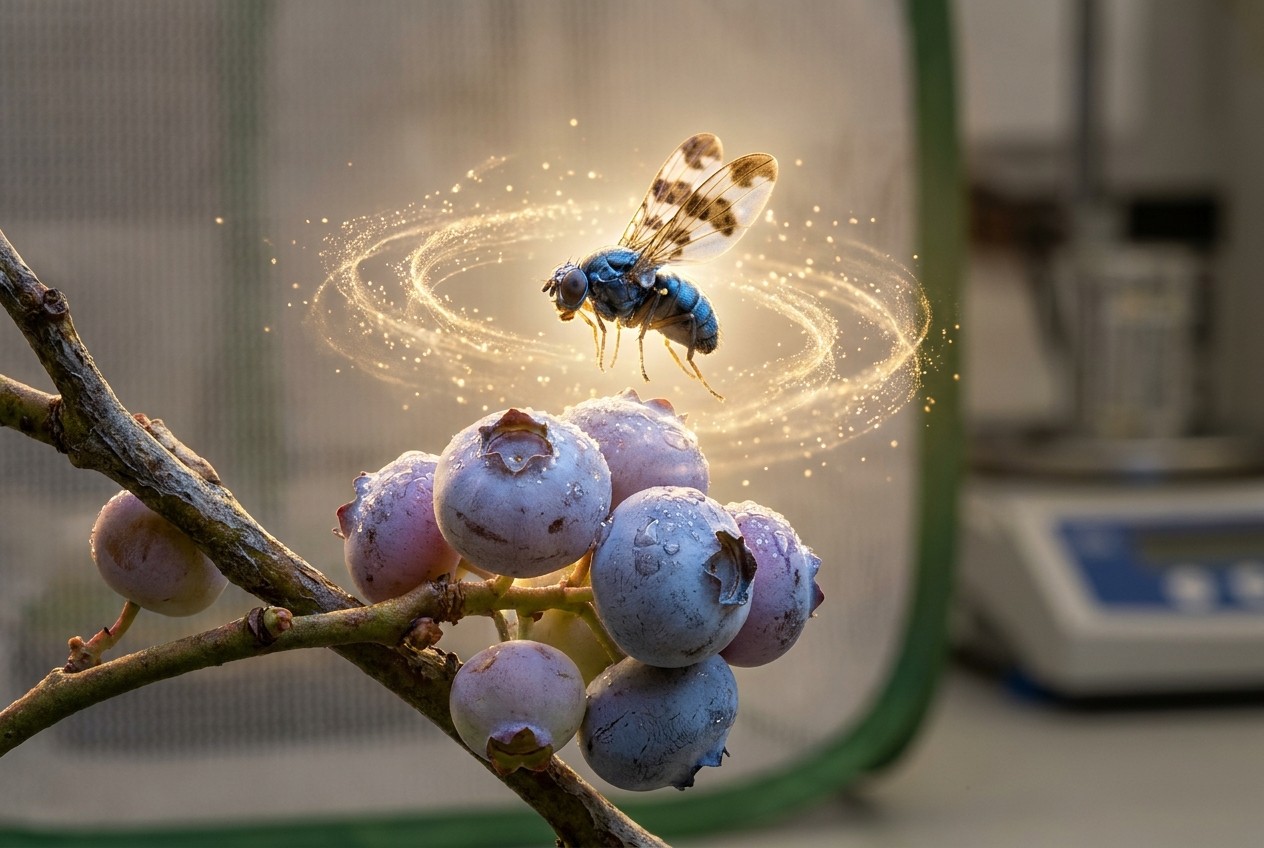
Researchers at Rutgers University and the U.S. Department of Agriculture (USDA) identified two yeast-derived scent compounds that repelled spotted-wing drosophila (Drosophila suzukii) in laboratory cage tests, according to a study published Oct. 6, 2026 in Applied and Environmental Microbiology.
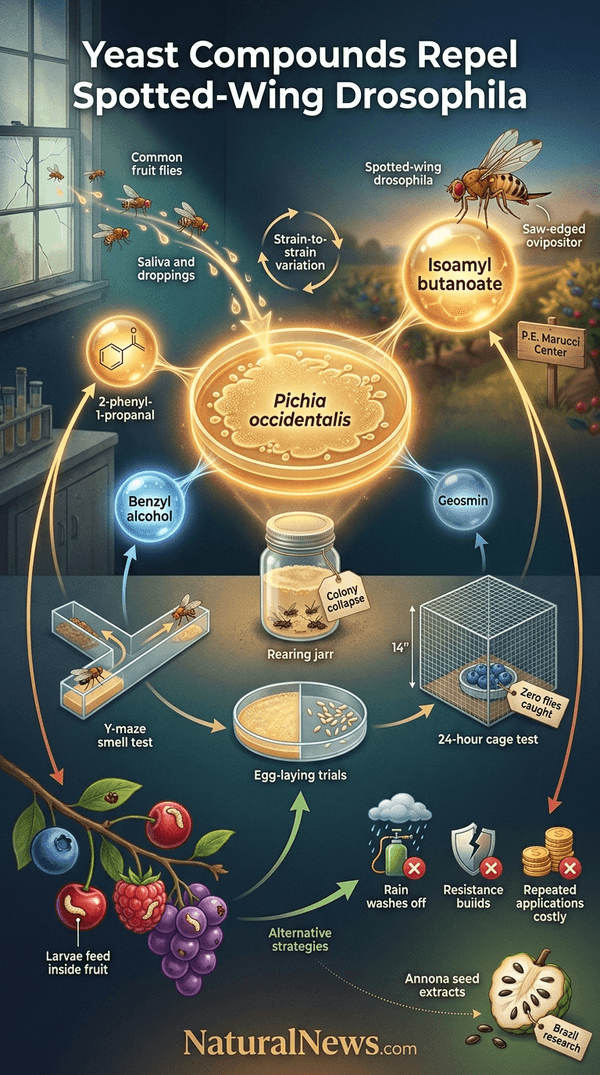
The compounds isoamyl butanoate and 2-phenyl-1-propanal are associated with the yeast Pichia occidentalis, which was found after a spotted-wing drosophila colony collapsed at a New Jersey blueberry and cranberry research center, the report stated. In a single 24-hour cage comparison, the top two compounds caught zero pest flies, a result that none of three established repellents matched, officials said.
The study was authored by Beth Ferguson and Cesar Rodriguez-Saona of the P.E. Marucci Center for Blueberry and Cranberry Research and Extension in Chatsworth, New Jersey; James J. Polashock of the USDA Agricultural Research Service; and Tia Hart and Jennifer S. Sun of the Department of Biochemistry and Microbiology at Rutgers University in New Brunswick, New Jersey. It appeared as a full-length Editor’s Pick in the Environmental Microbiology section of the journal, which published it as an open-access article after receiving it June 5 and accepting it Aug. 31, 2026, the journal said.
Background: Invasive Pest Damages Ripening Fruit
Spotted-wing drosophila is an invasive pest that lays eggs inside ripe blueberries, cherries, raspberries and grapes using a saw-edged egg-laying organ that cuts straight through fruit skin, according to the study. Larvae then feed from inside the fruit, where sprays have little direct effect, researchers said.
Insecticides also lose strength in rain, can harm beneficial insects and raise resistance concerns, so existing protection remains partial, the report stated. The pest’s habit of attacking ripening rather than rotting fruit distinguishes it from most fruit flies, complicating control efforts for soft-fruit growers.
The search for alternatives has extended beyond synthetic chemistry. Brazilian researchers investigated extracts from the seeds of Annona fruits as organic insecticides against spotted-wing drosophila, reporting that the seed extracts could kill the flies and prevent them from laying eggs [1].
A separate report on the same line of research stated that the extracts inhibited the fruit fly’s ability to lay eggs on strawberries [2]. Those findings, published in the journal Industrial Crops and Products, were supported by the Research and Rural Extension Company of Santa Catarina [2].
Discovery: Colony Collapse Led to Yeast Identification
At the P.E. Marucci Center for Blueberry and Cranberry Research and Extension in Chatsworth, New Jersey, common fruit flies (D. melanogaster) invaded a spotted-wing colony, a film of yeast appeared on the food, and the colony collapsed beyond recovery, according to the study. The invaders’ saliva and droppings carried the yeast, later identified as P. occidentalis, and pest flies were observed avoiding egg-laying in spots where it grew, the report stated.
The accident was more than a decade in the making and could one day transform how commercial crops are protected, according to Rutgers University [3]. The surprise discovery of a natural fruit fly repellent, reported by the university, could lead to new controls for one of New Jersey’s biggest blueberry pests [3].
An accidental fruit fly invasion in a research lab led scientists to identify a naturally occurring yeast that repels a major blueberry pest, according to The Microbiologist, which reported that the unexpected discovery could eventually support new non-chemical ways to protect soft-fruit crops [4]. Common fruit flies are known to associate with yeast in natural settings, including rotting fruit and other fermenting material [5].
Experiments: Scent, Lifespan and Egg-Laying Tests
In a Y-shaped maze smell test, groups of ten flies chose between yeast and a plain nutrient mix; spotted-wing flies avoided stronger yeast samples while common fruit flies were attracted to them, according to the study. Each yeast strength was repeated 15 times, with groups split evenly between males and females given one day to choose between two traps, the report stated.
In lifespan tests, male spotted-wing flies on yeast-treated food had half died by day 29 versus day 40 on plain food; females showed only a small late-life difference and common fruit flies showed no clear change, researchers reported. Each fly lived alone and received fresh food daily, with 24 flies for every combination of species, sex and diet, according to the study. Because the effect was modest and uneven, the authors concluded that killing flies is not the yeast’s main effect.
In egg-laying trials, spotted-wing females laid eggs mostly on the plain half of dishes while common fruit fly females favored the yeast half, the report stated, suggesting the pest treats the yeast as a poor nursery for its young. In 15 trials, each with 20 mated females, flies spent three hours on dishes with one yeast-coated half and one plain half, according to the study. Early on, females of both species modestly preferred perching on the yeast side, but rejection came only when it was time to lay eggs.
Compound Tests: Yeast Scents Outperform Geosmin in Cage Trials
Lab analysis of the yeast’s odor found 21 compounds, and the team added compounds from an earlier published scent profile of the same yeast species, according to the study. Each compound was tested alone in mesh cages 14 inches on a side with blueberry-baited traps, at four cages per species with 300 flies each, the report stated. Compounds sorted into camps: some lured both species, some repelled both, and a few split them.
Isoamyl butanoate and 2-phenyl-1-propanal repelled both spotted-wing and common fruit flies, so neither is pest-specific, researchers said. Benzyl alcohol drove off spotted-wing flies while attracting common fruit flies, and another compound repelled only the pest, according to the study.
In a single 24-hour cage test, geosmin let about 10% of released flies into traps, while every yeast-linked compound in the matchup let in fewer flies, and the top two let in none, the report stated. In the maze test, the top two compounds and benzyl alcohol still repelled spotted-wing flies when diluted to one ten-thousandth strength, a detail the authors said matters because scents thin out fast outdoors.
The authors speculated that compounds shaped by rivalry between fly species may outperform lab-screened chemicals. The study noted that the odor profile of the yeast isolate differed sharply from a previously published profile of another strain, which is why part of the candidate list came from that earlier work.
References
- A tropical fruit found to be an effective natural fruit fly killer – NaturalNews.com, October 17, 2018.
- Annona is a natural insecticide to fruit flies – NaturalNews.com, October 03, 2018.
- How Rotting Food in the Kitchen and a Whiff of… | Rutgers University. https://www.rutgers.edu/news/how-rotting-food-kitchen-and-whiff-vinegar-led-happy-agricultural-accident
- An unexpected lab guest reveals a natural pest repellent. https://www.the-microbiologist.com/news/an-unexpected-lab-guest-reveals-a-natural-pest-repellent/10197.article
- How Monarch Butterflies Evolved to Eat… | Scientific American. https://www.scientificamerican.com/article/how-monarch-butterflies-evolved-to-eat-a-poisonous-plant/
Explainer Infographic
Submit a correction >>
Tagged Under:
2-phenyl-1-propanal, breakthrough, Censored Science, discoveries, Drosophila melanogaster, Drosophila suzukii, Ecology, environ, Fresh, fruit flies, fruits, harvest, isoamyl butanoate, natural, Pichia occidentalis, research, spotted-wing drosophila, yeast, yeast compounds
This article may contain statements that reflect the opinion of the author
RECENT NEWS & ARTICLES